Protecting Patients and Providers with Smart Laser Safety
Laser services are in high demand in aesthetic practices, but they also carry high liability. When your schedule is packed and the laser is running all day, even small gaps in safety can lead to big problems. A smart laser safety program keeps patients, staff, and your reputation protected so you can treat consistently without constant worry.
A clear, compliant program in Virginia usually includes four core pieces: a trained Laser Safety Officer, written policies and logs, proper signage and personal protective equipment, and a detailed incident response plan. When these pieces work together, your team knows exactly what to do before, during, and after each treatment.
At Ageless Skin Rejuvenation in Virginia Beach, we see every day that strong safety systems support steady, profitable treatment schedules. Many of these systems are easier to build when your team has formal laser training certification in Virginia, because safety culture gets built into the way providers think and work from the start.
Defining the Laser Safety Officer Role in Your Practice
In a med spa or clinic, the Laser Safety Officer, or LSO, is the person who owns your laser safety program. This role can be filled by a licensed provider, a practice manager, or a clinical leader who has advanced laser safety training and enough authority to set and enforce rules.
Key LSO responsibilities often include:
- Performing laser hazard assessments for each device and room
- Reviewing and approving treatment protocols and parameters
- Overseeing signage, eyewear, and other protective equipment
- Coordinating staff training and keeping records up to date
- Working with your medical director and equipment vendors on safety issues
The LSO is the bridge between clinical reality and regulatory expectations. During high-volume months, when everyone is racing to keep up with demand, the LSO helps keep treatments consistent and safe by watching for shortcuts, outdated settings, or gaps in documentation.
Formal preparation for this role usually grows out of deeper education, like laser training certification in Virginia that covers ANSI standards, tissue interaction, and risk management. At a strong training academy, learners do not just push buttons; they learn to think like an LSO, asking: Is this safe, is this documented, and is this repeatable?
Building Written Policies, Treatment Logs, and Training Records
A compliant laser program lives on paper as well as in practice. Written policies give your team a shared roadmap so safety is not left up to memory or habit. With clear documents in place, new staff can get up to speed faster and seasoned staff have something solid to refer back to.
Core written laser policies often include:
- Patient selection criteria and pre-treatment evaluation steps
- Informed consent, photography, and documentation procedures
- Treatment protocols by device, indication, and skin type
- Equipment maintenance and calibration schedules
- Emergency shutdown procedures and reporting steps
Treatment logs are just as important as protocols. For every laser session, your charting should clearly show what was done, by whom, and under what conditions. A detailed laser treatment log typically includes:
- Operator name, role, and credentials
- LSO authorization or protocol reference
- Device name, handpiece, and serial or identifier
- Exact settings used, including energy, pulse width, and spot size
- Test spots performed and immediate skin response
- Post-care instructions given and any products applied
Training records round out the picture. The LSO should be able to show that each person using the laser has been trained for that device and that safety topics are revisited regularly. Strong training files usually have:
- Initial laser education certificates
- Competency checklists for each device
- Notes from vendor in-services and updates
- Annual safety refreshers and quizzes
These are the kinds of habits that grow when providers go through structured laser training certification in Virginia. At a hands-on training academy, students practice not only settings and hand placement, but also charting real-world cases and documenting their choices step by step.
Signage, PPE Standards, and Safe Room Setups
Laser safety is also about the physical space. Anyone walking into your treatment area should know right away that a laser is in use, what class it is, and how to stay safe. Clear, accurate signs and the right protective gear are non-negotiable.
Compliant laser signage usually includes:
- Warning signs at every possible entry to the laser room
- The correct laser classification and wavelength information
- A clear indication when the laser is in use and access is controlled
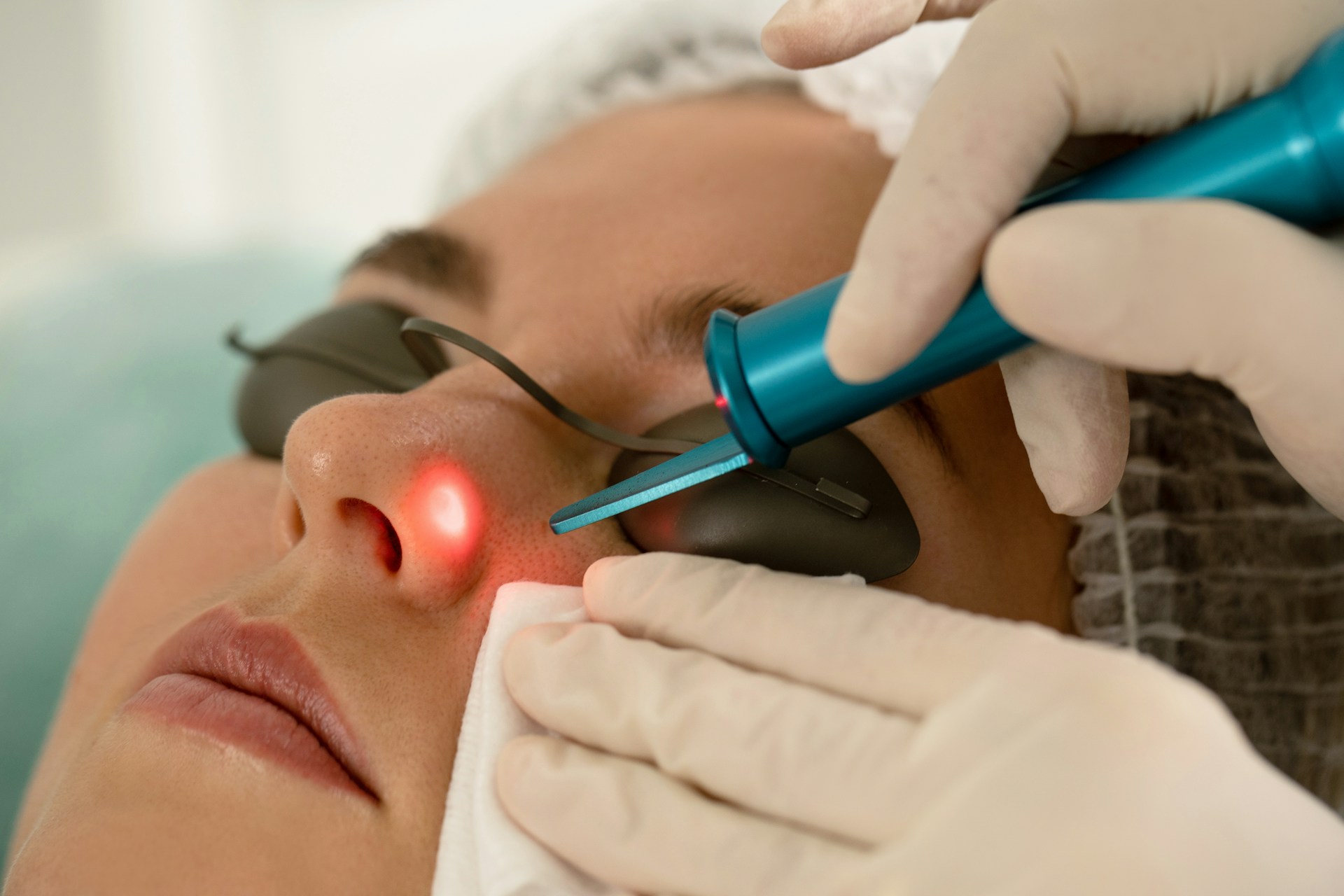
Personal protective equipment, or PPE, must match the laser and the treatment. At a minimum, your setup should include:
- Wavelength-specific eye protection for everyone in the room
- Eye shields or goggles for patients that match the device
- Skin protection when indicated, such as gowns or sleeves
- Smoke evacuators and appropriate masks when plume is present
- Draping to shield non-target tissue and reflective jewelry or surfaces
Room design also matters. Best practices for a safer laser room often include non-reflective surfaces where possible, closed doors during treatment, limited access, secure key control, and safe storage of handpieces and accessories when not in use.
High-quality laser training certification in Virginia usually includes practical time in real treatment rooms. Trainees learn how to choose eyewear by wavelength, where to place signs so nobody can miss them, and how to set up the room so stray beams are less likely.
Incident Response Planning and Post-Event Training
Even with strong safeguards, incidents and near-misses can happen. A written incident response plan keeps everyone calm and coordinated when something goes wrong. Your LSO should help build and update this plan so it matches your devices and workflows.
A good laser incident plan typically covers:
- Eye exposures
- Skin burns or unexpected reactions
- Equipment failures during treatment
- Near-miss events where harm was narrowly avoided
Immediate response priorities usually include stabilizing the patient, notifying the LSO and medical director, documenting what happened, securing the device, and arranging appropriate medical evaluation or referral. Every team member should know their role ahead of time.
After the event, the LSO can lead a root-cause review. That review may result in:
- Updated policies or clearer checklists
- Changes to room setup, PPE, or signage
- Additional one-on-one coaching for staff
- Using a de-identified version of the case in future safety training
At a training academy, these skills are practiced through mock drills and scenarios. When providers experience incident response during training, they are more confident and steady if they ever face a real event in practice.
Turning Laser Safety Into a Competitive Advantage
A strong laser safety program is not just about avoiding problems; it can also set your practice apart. When your team works under clear protocols, with a dedicated Laser Safety Officer, efficient documentation, and well-trained providers, treatments tend to run smoother and on time, even when the schedule is full.
Ageless Skin Rejuvenation’s Training Academy is built around this idea. We focus on skill and safety together, so that when providers complete laser training certification in Virginia, they are ready to help their practices tighten policies, standardize setups, and build a lasting safety culture that supports both patient trust and long-term growth.
Advance Your Aesthetic Career With Proven Laser Expertise
If you are ready to expand your skills and confidence with medical-grade devices, our team at Ageless Skin Rejuvenation is here to support your next step. Explore our hands-on approach to laser training certification in Virginia and see how real-world experience can elevate your practice. We will walk you through safety, technique, and client care so you can offer results-focused laser services with clarity and assurance. Have questions about schedules or enrollment details, or want to discuss your career goals, contact us to get started.